The Marketing Services M&A Market is poised for a return
We are anticipating a significant rebound in M&A activity for the Marketing Services sector as we enter the back half of 2024. Supported by our recent Digital Services market studies in Europe and North America, where we interviewed executive leaders at global independent digital services companies, as well as recent signs of broad recovery in global M&A activity.
Transaction activity in Q2 2024 shows an 11% increase from Q1. In Q2 2024, 424 transactions were completed globally, up from 383 in Q1 2024. This rise is particularly significant as Q1 marked the eighth consecutive quarter of decline from a peak of 617 transactions in Q1 2022.
*Source: Pitchbook Financial Database
Within the Marketing Services sector specifically, our recent engagements and pitches indicate robust activity for Q4 2024, with the potential to return to recent peak volumes in the first half of 2025. This optimism is shared by many in the industry, reflecting a broader sentiment of recovery.
Factors driving this positive trend include the following:
Decline in inflation and interest rates: Declining inflation and the anticipation of interest rate reductions are primary influences, which in turn are easing debt markets and facilitating transaction activity.
Recovery of marketing budgets: Marketing budgets are bouncing back faster and being deployed more rapidly, improving visibility, and leading to the majority of agency CEOs interviewed anticipating stronger performance in the second half of 2024.
Backlog of companies seeking an exit: Several Private Equity-backed Digital Services platforms are eyeing an exit after delays of up to 24 months, with many waiting for three to four quarters of robust growth as a trigger to launch a process.
Olympics and U.S. Presidential Election: Notable spending attached to the Summer Olympics and anticipated windfall of political budgets will create additional momentum.
Operational efficiencies beginning to be felt with AI: The adaptation of AI as an efficiency tool across disparate operational functions from Enterprise to SMB businesses are beginning to be realized.
As we navigate this dynamic landscape, the groundwork is being laid for sustained recovery in Global Marketing Services M&A activity, reflecting renewed business confidence and economic stability.
If you would like to speak to us about this topic or the broader market, please contact us.
European Digital Services Market The Investment Opportunity
While the digital services industry faced challenges in 2023, there are signs for recovery and growth in 2024, with a focus on building integrated capabilities, leveraging AI, and driving scale via M&A.
JEGI LEONIS and CIL have conducted a comprehensive survey of leading independent businesses in the European digital services market to understand their outlook for 2024 and what opportunities they see for the year ahead.
The survey focused on three areas:
Market conditions: how demand for services has changed in 2023 and likely areas for growth in 2024.
Industry trends: how margin dynamics have impacted group structures and which trends are having the greatest impact.
M&A outlook: which areas are going to be the focus for investment and what is the outlook for M&A.
While the digital services industry faced challenges in 2023, there are signs for recovery and growth in 2024, with a focus on building capabilities, leveraging AI, and driving scale via M&A.
If you would like an in depth discussion on this topic please contact us.
Recent breakthroughs, such as the advent of Generative AI tools herald a new era set to rival the impact that personal computers, the internet, and smartphones had on our lives.
This wave of innovation has the potential to propel industries forward at a pace, promising to revolutionize the way businesses operate. Tasks, once mundane, are being automated, insights are generated with greater precision, and decision-making is reaching new heights of sophistication. At the same time, AI is opening up fresh avenues of growth, sparking product and service innovations, redefining value propositions and driving operational efficiencies.
One fundamental theme, something that has been consistent across all of our research, remains the importance of the human touch. As the story unfolds, AI’s true power lies in its ability to complement and enhance human capabilities, accelerating progress and efficiency, and delivering higher quality end products and experiences. Firms are actively harnessing AI and related capabilities fueling a surge in M&A activity, as they strive to gain an edge in an increasingly digital economy.
Our report is designed to identify key themes arising from AI developments and their subsequent impact on businesses and M&A across the following sectors:
We look forward to continuing the conversation as the story unfolds. In the meantime, if you have any queries or would like to have an in depth discussion on this topic or the broader market contact us.
At the conference, Philipp Mueller, Chief Analyst & Product Officer of Outsell moderated a panel titled, “Value Creation with AI – Productivity vs. Growth.”
The panel featured Sejal Amin, Chief Technology Officer of Shutterstock, Nikesh Kalra, Chief Operating Officer of DeepMedia, and Ilya Meyzin, SVP, Head of Data Science at Dun & Bradstreet.
The discussion kicked off with Philipp reminding the audience that ChatGPT was only launched 15 months ago. While there has been time to understand what real value creation with AI can look like, achieving it still remains elusive for a lot of companies. He continued by sharing findings from a survey conducted by Outsell in Q3 2023 that revealed that over 80% of senior executives were experimenting with Gen AI, with a third feeling very confident that it would drive productivity improvements in their enterprises. However, nearly half of the respondents lacked confidence in the ROI of their AI investments, with only 10% anticipating revenue and growth.
A lot has happened since ChatGPT was launched nearly 15 months ago.
Philipp Mueller, Chief Analyst & Product Officer of Outsell
The Impact of Generative AI on Productivity
Gen AI’s impact on productivity was the first area of discussion with the panelists.
Sejal Amin elaborated on Shutterstock’s utilization of Gen AI to enhance productivity across their operations by improving customer experience through actionable insights to their customer and sales teams, optimizing developer workflows, and bolstering infrastructure security.
Ilya Meyzin, added that Dun & Bradstreet had been employing LLMS for several years (large language models) to improve data quality, ingest data, and generate new types of insights.
The Issue of Trust and Safety with Gen AI
As Gen AI adoption increases, concerns regarding trust and safety become more acute.
Nikesh Kalra from DeepMedia discussed AI’s role in helping trust & safety teams combat nefarious content, which he quoted is now a $20bn market.
Adopting Gen AI solutions from the third quarter of last year, Ilya from Dun & Bradstreet, emphasized the importance of addressing biases and hallucinations in AI, implementing rigorous data governance practices, and most importantly, using trusted and validated data.
Gen AI models are amazing, but many of the leading models are trained on the entirety of the internet, and the internet is a Data Frankenstein.
Ilya Meyzin, SVP, Head of Data Science at Dun & Bradstreet
Shutterstock has been using AI well before Gen AI became the norm, explained Sejal, to understand the users and meet their needs through personalized search, recommendation engines and content discovery tools. With the growth of AI usage within their business, they had increased their trust and ethics practices.
Nikesh Kalra reminded the audience that generated content was not just gathered from social media, but also from Zoom calls and across other platforms. With even the larger news and information services now turning to user generated content from sources like TikTok, he spoke about a move towards greater investment in the authentication of the data supply chain.
Trust is ultimately all we really have to run a company, country, and the world on. Authenticating the supply chain of news, information, and data, is more important than it has ever been before.
Nikesh Kalra, Chief Operating Officer of DeepMedia
Licensing and Growth resulting from Generative AI
The conversation shifted to the potential to drive revenue and growth through Gen AI.
Dun & Bradstreet is navigating the delicate balance between licensing proprietary data and protecting market competitiveness, carefully weighing the revenue upside with strategic threats. Meanwhile, Shutterstock capitalized on its immense repository of assets through partnerships with Gen AI hyperscalers, resulting in their first deal with OpenAI in 2022. Sejal Amin, however, noted a shift in demand towards tailoring smaller data sets for more conversive models.
We have to understand the user and their needs because that is the core of everything we do… As we sell our data, keeping models clean is a huge part of the responsibility we have.
Sejal Amin, Chief Technology Officer of Shutterstock
What’s in store for Generative AI in 2024?
Finally, the panelists speculated on what the biggest development in AI would be in 2024.
For Nikesh Kalra it was the weaponizing of AI during the perfect storm of global elections, virality of social media, and the adoption of AI on a massive scale. Both Ilya Meyzin and Sejal Amin envisioned that the “rubber will hit the road” on Gen AI with worldwide enterprise adoption of it. Ilya also highlighted that in 2024 the emphasis on guardrails – LLM safety controls and protocols – will become increasingly important.
In conclusion, the discussion emphasized the potential of Gen AI to drive value, productivity, and growth, alongside the imperative of addressing the challenges of risk and governance for all.
For more information about our conference please click here.
The Conference finished on a high with a captivating session featuring Wilma Jordan, Founder and CEO, North America of JEGI, in conversation with Duncan Painter, Chief Executive Officer of Flywheel, in a session titled, Flywheel: The Global Vision for E-commerce.
Stellar track record of build and sell
Wilma began by introducing Duncan, highlighting his stellar track record of building and selling businesses with achievements including a $848m deal for WGSN with private equity Apax Partners and the sale of Flywheel Digital to Omnicom for $835m. Duncan shared insights from his career, from founding consumer intelligence provider ClarityBlue, to navigating the challenges of transforming Emap from a company with zero market value through an IPO, generating a 1.5x return.
My first 180-day plan at Emap was just to stop us having to hand the keys back… stopping us going bankrupt was basically the mission.
Omnicom’s purchase of Flywheel
Transitioning to Duncan’s current role within Omnicom, the conversation turned towards retail marketplaces as a pivotable force shaping the digital landscape, and the impact they will have on the consumer orientated purchase industry. Duncan highlighted the seismic changes looming and cited John Wren, Omnicom’s Group CEO, for his foresight in positioning the organization at the forefront of change with the purchase of Flywheel.
Future of E-commerce
The discussion naturally progressed to Duncan’s perspectives on the evolving landscape of e-commerce and the future of retail.
The retail market, including retail marketplaces and retail media, is poised to undergo significant changes in the digital industry. This shift is often misunderstood, yet it represents the next major transformation in the field.
Duncan emphasized the dynamic nature of retail markets, comparing them to the stock market. He highlighted that the role of first party data is one part of the change but emphasized that the most significant element will be the provision, for the first time ever, of direct-to-consumer capabilities at mass scale with a real time view of trading across all environments. He quoted staggering statistics demonstrating Flywheel’s influence across global marketplaces with ownership of 50% of the top consumer packaged goods (CPG), 6,000 clients that use their platforms across 29 countries globally.
Throughout the day, our systems and teams constantly monitor trading activities across all our platforms in real time. The gross merchandise value (GMV) we influence amounts to hundreds of billions.
He continued by explaining that when they started to build Flywheel in 2015, they realized that they had to be inside the walled gardens of the marketplaces, building and leveraging capability for their brands. This approach not only allows the manufacturer to meet, and sell to their customers directly, but to know how every single US$ spent performs, allowing for pure retail optimization.
The future of bricks and mortar retail
With this retail trajectory, Duncan predicted that there will still be physical stores in 20-30 years, however they will be transformed into warehouses for collection rather than for customer facing retail space. With online retail sales expected to meet 40% of market share by next year and grow to 60-70% in the next five years, Duncan stressed the importance of a digital first approach, particularly as Generation Alpha had already reached 97% digital engagement.
If you aren’t a digitally enabled and digital first business, able to leverage and in a world where marketplaces will be the norm, then you are not really prepared for this 10-15 year wave.
The role of humans in future retail
Wilma inquired about the impact of digital retail on the retail workforce in the next 10 years with Duncan explaining a shift towards a more dynamic approach, where retailers would need to be “hedge fund managers rather than portfolio managers”. He explained that last year 70% of net growth on marketplaces within Amazon in the US came from direct brands from China trading directly, selling to the US population. He warned that Western retailers need to rethink their sales strategies to remain competitive against East Asian retailers whose P&Ls don’t include high salaried product, sales, and marketing directors, and therefore having the ability to invest in optimizing their products on retail marketplaces.
The current global landscape is undergoing significant changes. Traditional barriers to building, creating, and selling are diminishing, while economic models are evolving rapidly, facilitated by the rise of global marketplaces. This transformation is occurring so swiftly that many organizations have not fully grasped the implications of these shifts.
The rise of retail media
With the retail media market growing 100% year on year, even before optimization is realized, Duncan believed it will become the largest retail platform, boasting unparalleled attribution capabilities, “for the first time ever attribution is pure.” He underscored its transformative potential in advertising effectiveness and revenue generation, particularly evident in Amazon’s revenue streams.
For more information about our conference please click here.
The last year has seen the Events industry bounce back faster than anyone expected. The face-to face (F2F) industry, be it exhibitions, conferences, peer-to-peer or experiential has seen a surge in growth with events participants having a renewed appreciation of the value of F2F engagement in driving sales, networking, learning and collaboration.
While the fundamental allure of in-person interactions remains unchanged, the rise of Artificial Intelligence (AI) is enabling a new era of enhanced experiences, efficient operations, and innovations within the industry.
The reasons that people attend events is unlikely to dramatically change due to AI advancements. AI technology is finding its stride in augmenting these connections, providing scope to deliver more innovative, cost effective, efficient, and tailored experiences.
AI-Powered Trends
Lead generation and qualification
A key part of AI’s potential impact on the events sector lies on its prowess in real-time crunching of huge amounts of data. The ability to aggregate and analyze diverse proprietary data sets (e.g. feedback, registrations, interactions, sales patterns) with third party unstructured data (e.g. social media activity and engagement) will allow rapid qualification, identification and prioritization of leads for exhibitors in advance and on the day to ultimately drive higher levels of engagement and conversion.
Efficiencies through automation
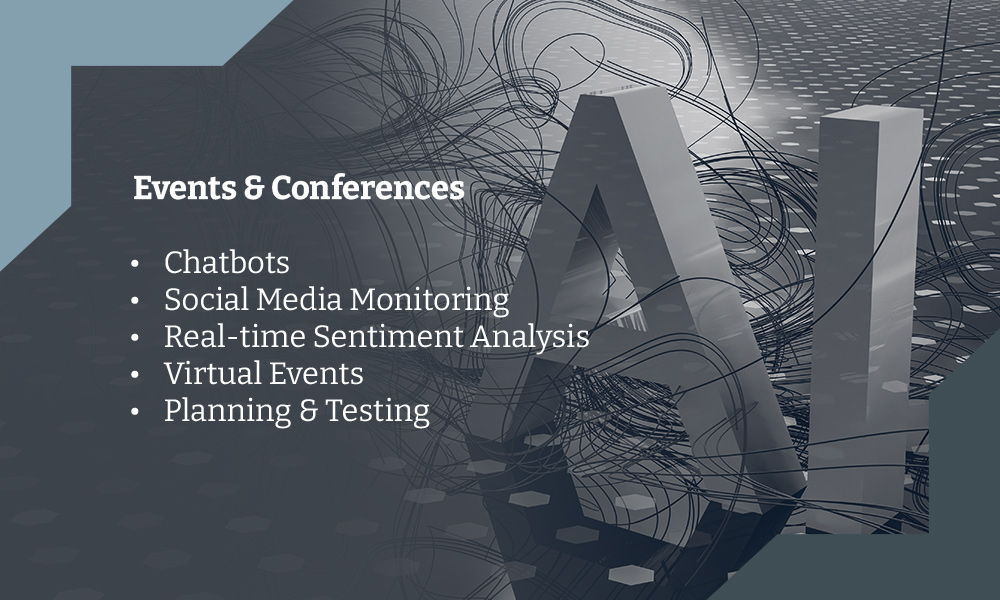
The challenges of event planning – from registration and ticketing to speaker management and content production – are now prime candidates for AI-powered automation. Chatbots are emerging as versatile assistants, addressing attendee inquiries, processing payments, and distributing tickets. This automation will not only accelerate tasks but could free up event staff to focus on value-added endeavors. Eventex, for example, has already incorporated ChatGPT into its event management platform. Behind the scenes, event logistics are becoming more streamlined by AI tools that manage speaker availability, venue capacities and attendee preferences – helping organizers be more efficient.
Innovative and tailored event experiences
AI can also create new, innovative event experiences. While Generative AI based chatbots can drive efficiencies, they can also act as virtual concierges at events, providing attendees with instant and tailored guidance. Social media monitoring becomes a powerful tool to gauge attendee sentiment in real time, which could enable rapid interventions and elevate the overall event atmosphere. Facial recognition technology is being deployed to read attendee emotions, providing a new source of real-time data that paints a vivid picture of overall feeling, albeit at the risk of invading the privacy of attendees. All of these and more can potentially be combined with data based on footfall, visitor flow, content engagement, conference attendance and more. All of this data can then be used to optimize event dynamics on the fly.
Similarly, the advent of virtual and augmented reality offers novel opportunities for hybrid events that engage both on-site and remote participants. Through real-time translation of speeches and transcripts, audiences can be extended worldwide while on the ground, participants can be engaged more actively and creatively.
AI in set design testing becomes an agile playground for organizers, who can experiment with various layouts and ideas in a low-cost, nimble fashion. This innovation will help to precisely curate F2F experiences that cater to attendees’ needs and preferences.
Conclusion
Utilizing cutting-edge data analytics, seamless automation, and new innovations, AI is reshaping the landscape of events, transcending them beyond conventional gatherings. Participants can take part in captivating and tailored experiences, while event organizers have an opportunity to benefit from enhanced efficiencies and the invaluable insights that support an ongoing process of improvement.
Despite the continued integration of AI, the bedrock of success for any event remains rooted in authentic human connections, rendering the industry more robust against AI disruption.
As event organizers continue to amass operational efficiencies and AI technologies enhance the value proposition for attendees, the sector remains an attractive area to explore from an investment perspective.
We look forward to continuing the conversation as the AI-story unfolds. If you have any queries or would like to have an in depth discussion on this topic or the broader market please Contact us. Our next AI article delves into the world of Software Development.
Generative AI represents the next, and potentially most meaningful, key stage of Artificial Intelligence impacting the legal market. Generative AI ushers in a new era of efficiency involving automating routine tasks, enhancing legal research, and reshaping how lawyers construct arguments. Its potential to unlock unprecedented insights, streamline contract management, and predict legal outcomes heralds a transformative journey that promises to redefine the legal landscape for lawyers and clients alike.
History of AI in the Legal Industry
AI has already had an undeniable impact on the legal industry. There have been several pivotal stages, from eDiscovery Technology Assisted Review (TAR) and Litigation Analytics to Document Automation and Contract Analytics, that are important to understand when considering the impact that we anticipate Generative AI will have on this market.
The legal world saw its first glimpse of AI’s potential back in 2005 with eDiscovery TAR, which introduced a future where artificial intelligence could perform document review by detecting patterns in documents, effectively optimizing the tedious discovery process. TAR has been a critical driver of eDiscovery ranging up to becoming a $20B industry. Despite the subsequent innovations, across the market TAR remains the largest and most successful example of AI’s impact on the legal market.
Fast forward to 2012, and the legal market began to witness the rise of litigation analytics. Litigation analytics involved leveraging AI to detect patterns in data coming out of dockets, and case law to deliver profound insights and analytics on law firms, companies, and judges. These analytics are used for business and practice of law purposes. At first, the market was dominated by companies like Bloomberg Law, Docket Alarm and Lex Machina, but now a diverse range of players, from established companies to nimble startups, offer litigation analytics.
The mid-2010s marked a period of transformation through document automation. Before the era of Generative AI, we witnessed automated form completion based on decision trees and app-driven expert systems. Neota Logic and LegalZoom were early disruptors across both B2B and B2C, while Legalmation led the way in providing automation of pleadings in litigation. Since then, no-code/low-code platforms have become increasingly popular, allowing users to deploy software applications without needing a technical background.
The impact of AI extended to contract analytics, encompassing everything from pre-execution contract analysis to contract lifecycle management. Pattern recognition AI technology, effectively the early TAR on steroids, laid the foundation for contract analytics. Not limited to just legal use cases, contract analytics also ventured into compliance and front of the house use cases. A surge in capital raises during 2019-2021, and early 2022 has led to inevitable market consolidation.
Generative AI: Shaping the Future
The arrival of Generative AI back in 2022 heralds a new era of efficiency and effectiveness for legal professionals. Lawyers can leverage AI to handle repetitive and lower-end tasks, freeing up invaluable time and resources for higher-complexity, value-added work. In-house legal groups are increasingly turning to AI and tech-enabled solutions instead of relying on outside counsel. These advancements are now bearing fruit for early adaptors.
Internet browsers and the World Wide Web popularized the Internet for most people, and that development transformed whole industries, including law. In a similar way, Generative AI is the first exposure that most people have to powerful AI tools. Generative AI is just as disruptive. It is already changing what legal services law firms offer, how they price services, and what tasks corporate legal departments can handle in-house.
Ed Walters, Chief Strategy Officer, vLex
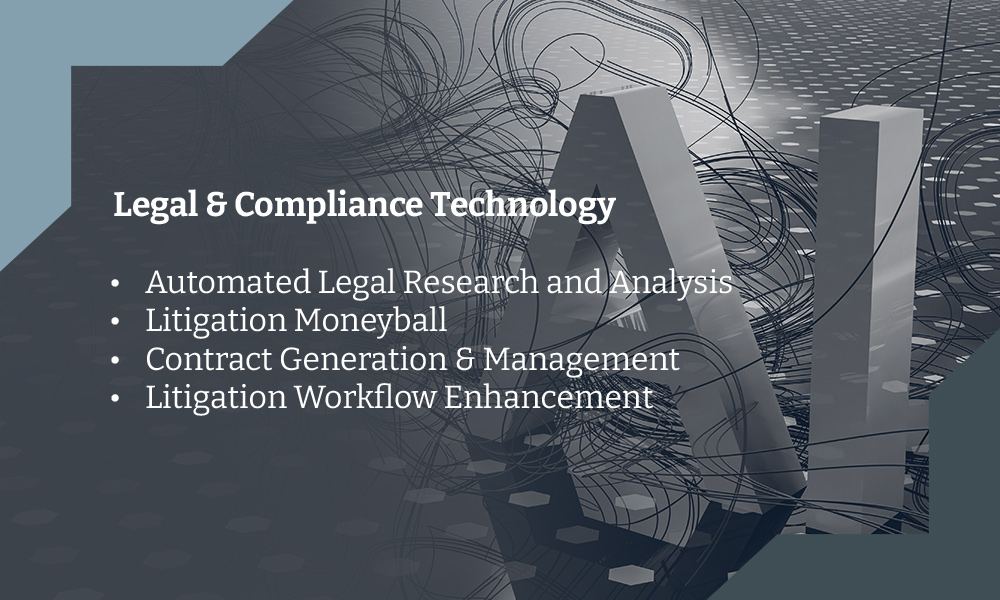
Automated Legal Research and Analysis
Generative AI possesses the unparalleled ability to process vast volumes of data faster and more accurately than humans. It can extract relevant information, answer questions, and build robust legal arguments.
Litigation Moneyball
Legal professionals can use Generative AI to analyze data to identify high-value clients, predict likely outcomes and behaviors, and recommend case strategies and settlement analysis. This revolutionary technology is already transforming areas such as personal injury, class action, and mass torts.
Contract Generation and Management
Generative AI streamlines the process of drafting and negotiating contracts. It provides invaluable insights that have the potential to standardize certain contract types across the market.
Litigation Workflow Enhancement
The benefits of Generative AI extend to AI-generated case law summaries, accelerated document review and summarization, deposition preparation, and regulatory compliance. It even takes on tasks like automated transcription, brief preparation, and formatting.
Conclusion: Embracing the AI-Powered Future
While we stand at the threshold of Generative AI’s influence in the legal market, its accuracy and adoption are still in the early stages. Yet, the trajectory is clear. Generative AI is poised to transform workflows, enhance efficiency, and empower lawyers to focus on the more strategic aspects of their profession. In the end, the synergy between human expertise and artificial intelligence is the way forward in the legal world.
M&A Role
Given the anticipated pace of transformation and the increasing adoption of Generative AI, we expect M&A to play a pivotal role in the legal market as firms look to gain a competitive edge. The table below includes AI-related transactions in 2023, which highlights this trend.
We look forward to continuing the conversation as the AI-story unfolds. If you have any queries or would like to have an in depth discussion on this topic or the broader market please Contact us. Our next AI article delves into the world of Events and Conferences.
Power of 5: Events Reinvigorated An Industry on the Move
5 Leaders, 5 Questions, 5 Minutes
In our most recent Power of 5 series, we asked five questions to five leading executives across the global B2B Information and Events landscape.
This series featured Peter Jones, CEO of Nineteen Group, Lisa Hannant, CEO of Clarion Events, Paul Miller, CEO of Questex, Gareth Bowhill, CEO of CloserStill and Simon Foster, Group CEO of Arc. A big thank you to all the participants for their involvement.
Here we share some of their collective thoughts on the trends and opportunities ahead for the events industry. Please click here if you would like to access the videos.
How have you seen the B2B events market evolve in the last 12-24 months?
The resounding story from the B2B Information and Events sector over the past couple of years has been the successful return of live events.
We’ve seen a ferocious appetite from both exhibitors, sponsors and also delegates to come back to events.
Gareth Bowhill, CEO, CloserStill
Peter Jones of Nineteen Group emphasized the value of live events, suggesting that their true worth became evident only when they were temporarily lost. A sentiment echoed by Gareth Bowhill of CloserStill who stated that their revenues have surged by 15% organically compared to pre-Covid levels. Statistics and attitudes of clients clearly indicate that people wanted live media that they could trust for lead generation opportunities, continued Simon Foster of Arc.
However, as several participants in the Power of 5 identified, the composition of event audiences has undergone significant changes. Lisa Hannant of Clarion observed that there was a trend happening pre-pandemic of people, both in the industry and customers, changing roles, which has accelerated post-pandemic. She noted that industry operators need to adapt as their customer base is predicted to change roles every two-three years, which would continue to drive a shift towards many more first-time attendees to the events.
This change in audience masked a second trend explained by Paul Miller of Questex – the entrance of technology and software into the market. These tools enable data driven strategies that, through smarter customer insights, are resulting in better products and more meaningful relationships.
We see ourselves as a modern media business, bringing communities together 365, 24/7.
Paul Miller, CEO of Questex
Where do you see the key opportunities for your business during the next year?
There was an agreement from all the participants that the future is omnichannel businesses that seamlessly integrate content and live events with strong membership models.
Nineteen Group’s commitment to embracing digital through podcasting and digital events, while retaining a focus on physical events was the main emphasis for the next year according to Peter Jones. Gareth Bowhill of CloserStill outlined their core growth levers being existing events and extensions of these brands, new product launches and engaging in M&A, seeing a landscape that allows them to push forward on all fronts.
We have a comfort in the many different formats that customers want to meet their customers – whether a conference, one to one event, digital or in-between – that allows us to respond in the right way to whatever customer group we are serving.
Lisa Hannant, CEO of Clarion Group
Simon Foster of Arc revealed their future strategy of integrating businesses within their group and leveraging the expertise and knowledge and different elements they have within the business to deliver success to their clients. A commitment to doubling down on the data driven strategy aimed at providing superior products, that had been shaped from intelligence generated through interaction with content on their websites, was stated as a key opportunity for Paul Miller of Questex.
From an M&A perspective what is your criteria and where are you focusing?
Criteria for possible mergers and acquisitions included shared interests with existing organizations – mutual markets, complementary geographies, client synergies – or adjacent industries, companies with talent sets that can help build greater businesses and those with matching cultures and ethos.
Lisa Hannant of Clarion mentioned that they have a clear view of the sectors the Clarion team felt the business was potentially unweighted in and wanted to push harder in. Gareth Bowhill of CloserStill, echoed this sentiment, emphasizing the importance of opportunities of the underlying markets they are already serving.
Paul Miller of Questex stressed the significance of EBITDA thresholds and focusing on businesses with verticals they are already within or adjacencies to the verticals, so they can build buy-sell strategies. Peter Jones of Nineteen Group emphasized their strategy of identifying established, successful events with existing infrastructure and enhancing them to achieve even faster growth.
There were no real limitations when it came to regions for most, although the US, Europe and Asia were of particular focus.
We are looking at businesses that fit with our existing structure and existing markets that can add value as opposed to just driving scale.
Simon Foster, Group CEO, Arc
If you look at the landscape, who of your peers do you admire?
Companies that are not only great to the outside world but are focused on building culture and strength internally while growing was the type of business Simon Foster of Arc admired. While Lisa Hannant of Clarion Group acknowledged how there is so much good work from so many organizations in the sector – from larger companies to smaller, more nimble start-ups. But what she admires most are those companies that are focused, and purpose driven around individual markets. Paul Miller of Questex commended companies that prioritize culture and leadership and are not building just a great business but a strong culture as they grow.
Phil Soar is an absolute genius. He has the ability to see around corners in blizzards.
Peter Jones, CEO of Nineteen Group
All the stakeholders underscored the importance of collaboration within the sector, acknowledging their peers and their organizations as those they admired and respected the most. Clear articulation around company vision, purpose driven business models around individual markets, leading stances on ESG initiatives and those that embedded culture into their leadership were admired by all.
It is evident that these five leaders are at the forefront of driving the Information and Events landscape, with a shared vision for a promising and vibrant future.
AI-volution | The unfolding story Performance Marketing
Technological advancements in processing vast amounts of data are sparking a revolution for Brands, Agencies, and Tech Partners across the Marketing Services landscape raising the bar yet again on the industry’s unwavering focus on improving performance.
The emergence of Generative AI and data analytics tools is transforming the way marketers harness data to create content and execute advertising campaigns across the addressable landscape; from paid search, and optimize organic SEO to Social and Connected TV (CTV).
As adoption of technologies such as ChatGPT, Bard, Perplexity and a growing list of marketing focused AI tools take center stage, performance marketers are reaping the benefits including better campaign performance predictions, personalization at scale, and improved return on investment.
However, with the rewards come challenges such as brand safety concerns and questions about AI’s ability to produce expert content.
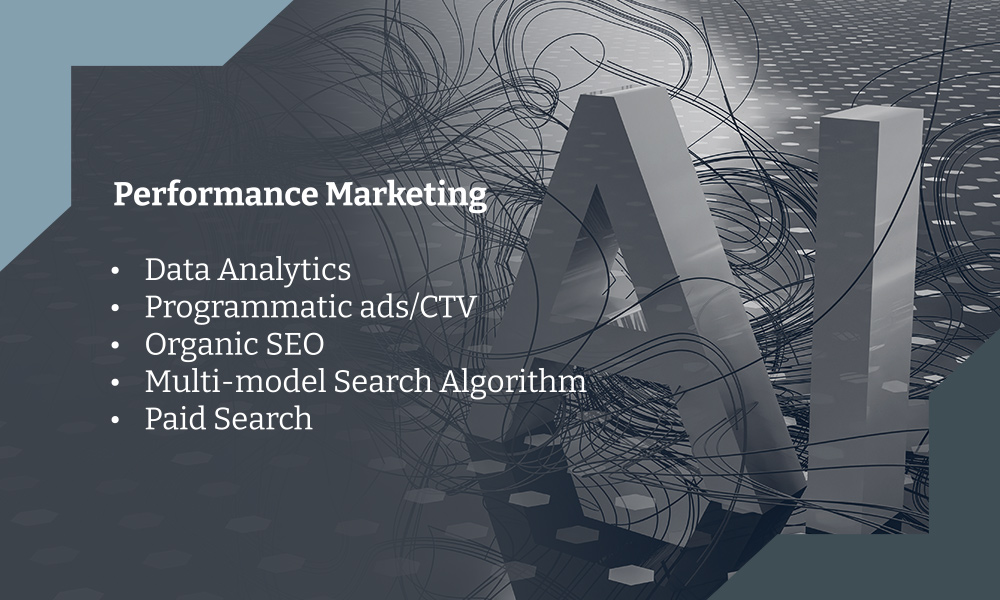
Data and Analytics: Decoding the Power of Insights
At the heart of the performance marketing revolution lies data and analytics. The integration of diverse, unstructured data sources is enabling marketers to glean new insights, providing a holistic understanding of their audience’s behaviors and preferences in advance of executing campaigns. Companies like Personalize, Chalice.ai, Ad Copy, Seven Sense are leveraging First-party data and Generative AI to deliver personalized and responsive experiences, supercharging the marketer’s ability to build stronger connections with their customers.
Interpreting this wealth of data to inform creative, strategy, and campaign optimization has emerged as an invaluable skill in the industry. Analysts who can decipher the data and draw meaningful conclusions are increasingly in high demand. Selecting and parsing through disparate data sources can also be augmented by AI with tools like Narrative I/O’s Rosetta.
In the big advertiser market, there is considerable interest in owning the predictive capabilities currently bundled with Google and Facebook media. Your own ad AI promises more efficiency, less risk.
Adam Heimlich, CEO of Chalice.ai
Content Creation: The Rise of Gen AI in Programmatic Advertising
Automation stands to reshape the content creation landscape, particularly for programmatic advertising aimed at CTV.
With Generative AI tools at their disposal, marketers can now automate content production in ways not before possible. Tools such as Memorable and INK use data-driven insights to inform content creation, facilitating a low-cost, fast-moving approach at scale.
The implications of this transformation are profound. Imagine a world where the actual visual content seen in Ads has been machine curated for you based on real-time data from your recent online activity and behaviors. We are fast approaching that moment.
However, as AI takes over content creation, concerns about brand safety have also surfaced. Striking a balance between mass personalization and maintaining brand integrity is a key challenge that marketers must address.
Paid Search: The Algorithmic Advantage
The world of paid search has seen a seismic shift with the rise of Generative AI and Data Analytics. Smart bidding and responsive ads have become the norm, leveraging AI’s ability to analyze vast amounts of data and optimize campaigns in real-time. Multi-model search algorithms (that can understand the context of connected images and words) have further enhanced search relevance and performance.
Can Paid Search improve even further in its efficacy? Marketers can now achieve more significant results with fewer resources. By capitalizing on AI-driven insights, they can improve return on ad spend, making every advertising dollar count.
Organic SEO: Elevating the Standards
AI-powered tools have refined the way marketers streamline copywriting, introducing mass automation and individualized relevance to create better-performing content. However, while AI copywriting (such as ChatGPT, Jasper and Anyword) has raised the bar, it still falls short in generating expert-level content that requires deep domain knowledge (albeit MarketMuse a research and copywriting tool is taking on this challenge).
As AI tools mature, there is a need to bridge the gap between AI-generated content and the expertise of human writers in order to achieve relevance at scale. The evolving SEO landscape is prompting marketers to reconsider their content strategies and find the right balance between AI-generated content and human expertise.
At our agency, embracing new technologies is not something new. It happened with cloud, with privacy and now with AI. Staying updated is a part of the offering. We need to lead in this space because our clients demand it, and it’s interesting to see the rapid innovation that comes from agencies ensuring they stay competitive and relevant.
Christoffer Lötebo, Group CEO of Precis Digital
Conclusion: Embracing the AI-Powered Future
Generative AI and data analytics are undeniably transforming performance marketing, enabling better predictions, personalized experiences, and improved ROI. The power of data has unlocked new insights and opportunities, empowering marketers to make data-driven decisions that resonate with their audiences.
While AI is revolutionizing content creation and its consequent effect on organic SEO, it is crucial for marketers to acknowledge the limitations and find ways to leverage AI’s strengths. Embracing the AI-powered future requires a delicate balance between automation and human expertise to maintain brand safety and produce high-quality, expert-level content.
As the AI landscape continues to evolve, performance marketers must stay agile and adapt to these transformative technologies.
M&A Role
With the adoption of Generative AI and the pace of change we expect M&A to play a central role as Brands, Agencies and Tech Vendors race to gain a competitive advantage be that in adding consultative expertise or in direct tech. The table below includes AI-related transactions over the last three years, which highlights this trend.
We look forward to continuing the conversation as the AI-story unfolds. If you have any queries or would like to have an in depth discussion on this topic or the broader market please Contact us. Our next AI article delves into the world of Animation & VFX.
Recent breakthroughs, such as the advent of generative AI tools like ChatGPT, herald a new era set to rival the impact that personal computers, the internet, and smartphones had on our lives.
This wave of innovation has the potential to propel industries forward at a pace, promising to revolutionize the way businesses operate. Tasks, once mundane, are being automated, insights are generated with greater precision, and decision-making is reaching new heights of sophistication. At the same time, AI is opening up fresh avenues of growth, sparking product and service innovations, redefining value propositions and driving operational efficiencies.
One fundamental theme, something that has been consistent across all of our research, remains the importance of the human touch. As the story unfolds, AI’s true power lies in its ability to complement and enhance human capabilities, accelerating progress and efficiency, and delivering higher quality end products and experiences. Firms are actively harnessing AI and related capabilities fueling a surge in M&A activity, as they strive to gain an edge in an increasingly digital economy.
With this in mind, we are excited to introduce AI-volution | The unfolding story – a series of articles designed to identify key themes arising from AI developments in select sub-sectors and their subsequent impact on businesses. This series will cover:
Over the coming weeks, we will unveil each of these sector pieces individually, and welcome you to engage in discussions and share your own AI experiences. These insights will culminate in a final report, available for download, encapsulating AI’s potential opportunities and threats and common themes across the selected sectors.
We look forward to continuing the conversation as the story unfolds. In the meantime, if you have any queries or would like to have an in depth discussion on this topic or the broader market contact us.